"Olé" for Olives!
Autumn is the time for all things Olive here at La Loma. Throughout the year we watch them turn from delicate yellow flowers into those wonderful little green and black fruits which are the essence of the Mediterranean diet. Once harvested, the naturally bitter olive is transformed into the liquid gold we all know as olive oil or patiently cured into the savoury treats that are enjoyed around the world, being one of the most widely produced fruits.
Autumn is the time for all things Olive here at La Loma! Throughout the year we watch them turn from delicate yellow flowers into those wonderful little green and black fruits which are the essence of the Mediterranean diet. Once harvested, the naturally bitter olive is transformed into the liquid gold we all know as olive oil or patiently cured into the savoury treats that are enjoyed around the world, being one of the most widely produced fruits.
Ale and Carlos, the local Spanish team
Mathilde and Tanjalee volunteers
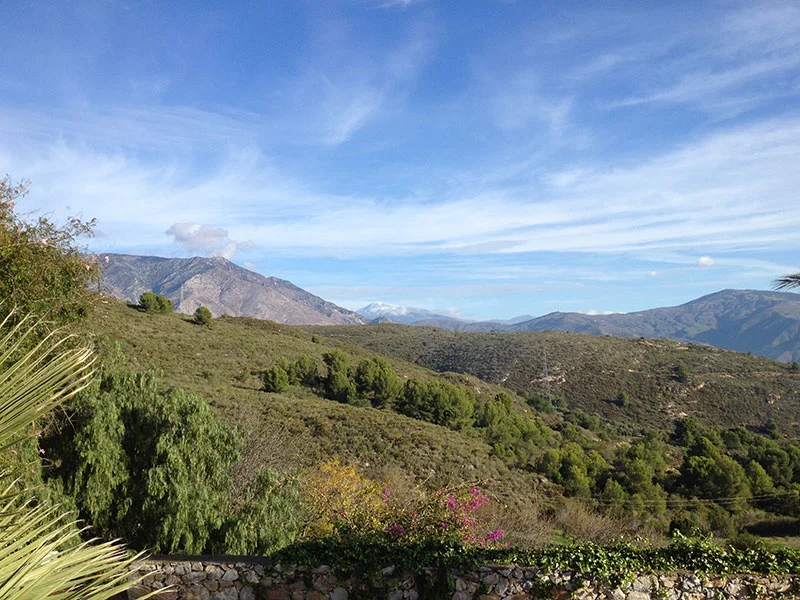
We have about 90 olive trees, called Olea Europea, which are said to be around 100 years old. Our sunny olive grove is poised 600m up the side of a mountain overlooking the Mediterranean and surrounded by wild herbs like rosemary, thyme and lavender. This year these incredibly hardy trees endured a scorchingly hot summer with temperatures over 40 degrees for over a month, not a drop of rain from May until the end of September and then unusual autumn weather of howling winds and rain storms, which shook almost half of the already early ripened olives to the ground.
Most years we have harvested the olives for making oil in late November or December but due to unpredictable and crazy weather patterns they are now ripe and ready in October (although many of the oil mills are not yet open). With the help of some lovely volunteers who had just arrived and our super local Spanish team, we harvested 520kilos in less than 2 days to take to the press, plus a few extra crates for making edible olives.
As the girls and I were leisurely plucking olives from the trees, enjoying the wonderfully warm autumn sunshine, we discovered lots of interesting and fragrant herbs on our path, prefect for later adding to the flavour of our bottled delights. I felt united with women past and present, investigating their surroundings and chatting while harvesting food.
So far, the olives we have cured for eating have tasted really good but we are still experimenting with techniques and trying to find the most energy efficient and appetising method. This year we are trying both the brine method and dry salt method. We harvested some smaller wild olives (called Acebuches in Spanish) a couple of weeks ago and put them in dry salt and amazingly it seems as if they are already fine to eat. With the bigger olives if you leave them whole, without cutting or parting them, it can take as long as one year to remove all the bitterness and achieve the best flavour.
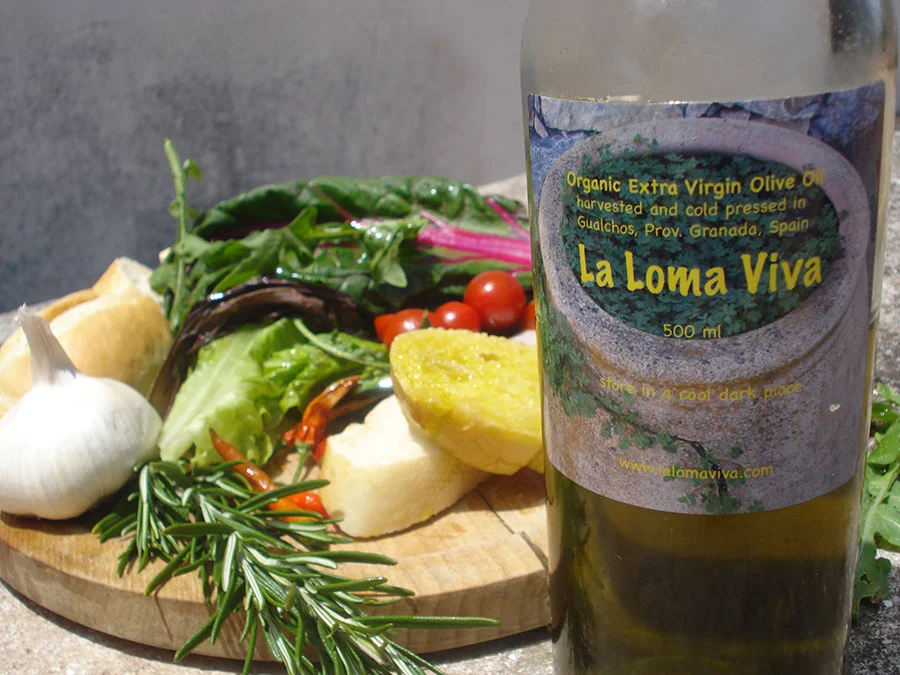
The next day we took all the olives we had harvested to a local mill about 1 hours drive away. At the mill they wash the olives and remove all the remaining leaves and things. They then go into a macerating area where they are crushed up into a pulp. After that, the mix is spun centrifugally to achieve what is known as Extra Virgin Olive oil. Traditionally they would have been crushed under large stones to extract the oil. I´m sure it´s a timeless feeling of happiness when the goldy green liquid emerges at the end! We patiently filled up containers, hoping for more and more to appear. This year we left happily with just under 100 litres of pure organic olive juice.
Olives about to be cured
Happy me at the oil mill
When we moved to Spain and specifically when we started making our own oil, we pretty much started using olive oil with practically everything. And we use it liberally because it is so good for you. We even use it as a moisturiser and conditioner, as it contains the real active ingredients that most beauty products put a hefty price tag on. Olive leaves can also be infused to make a highly medicinal tea.
Its no wonder that the reputation of Olives has biblical proportions. There is a lot of scientific evidence to show that this unassuming little fruit has some serious health giving powers! It´s two major properties are that it is both anti-oxidant and anti-inflammatory. Its anti-oxidant phytonutrients protect nerve cells from oxidative stress, assisting the healthy functioning of many of the body´s systems, specifically the cardio-vascular system. The anti-inflammatory benefits of olive and olive products serve as a natural anti-histamine, helping not only with allergy related illnesses but inflammation in general. Both of these properties are said to give it a protective effect against cancers, as chronic oxygen related damage and chronic inflammation are considered the prime factors in the onset of cancer. The nutritional profile of olives is huge and amongst other things they are a very good source of copper, iron, dietary fibre and vitamin E. This is why they have been associated with longevity and health in Mediterranean cultures for thousands of years.
So as another harvest comes to an end, we can enjoy the immediate pleasure of our delicious oil and continue preparing all the olives to savour over the coming year. We are thankful for our hardy and tenacious trees and say "Olé" for Olives!
Edu from the Spanish team jumping around on his harvesting stick
The word “Olé" is a Spanish interjection derived from an Arabic invocation of Allah, (w-állah), meaning “by Allah!” (I have added this information as I love learning about the roots of language and it reminds me that we are all a lot more connected than we think.)
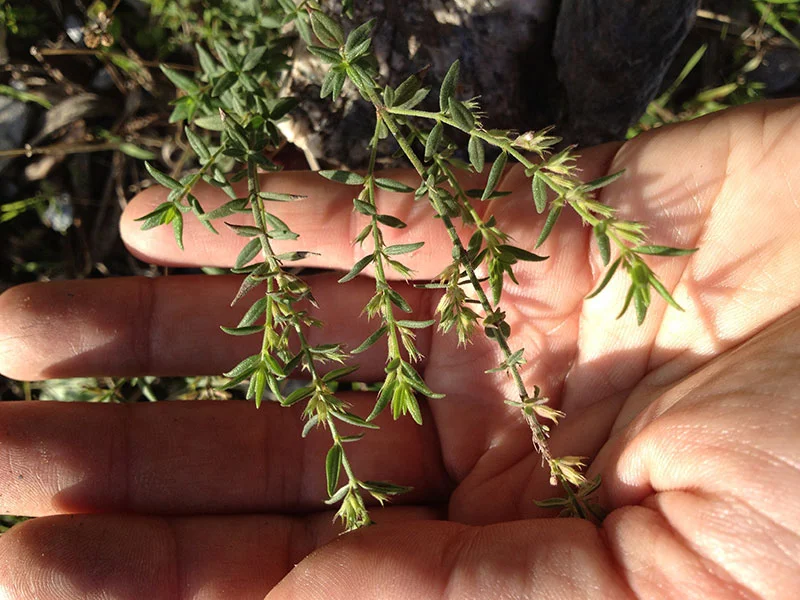
Wild Thyme
“The herb wherever it grows wild denotes a pure atmosphere, and was thought to enliven the spirits by the fragrance which it diffuses into the air around. The Romans gave Thyme as a sovereign remedy to melancholy persons.”
Wild Thyme is a highly medicinal plant which grows abundantly on our Mediterranean mountainside. The name is a cheeky play on words that inspired me to begin this blog.
Wild Thyme is about coming to our senses. It is about re-wilding ourselves in the natural world. Creating a space for us to be part of Nature and a place within the natural rhythms of life.
“The herb wherever it grows wild denotes a pure atmosphere, and was thought to enliven the spirits by the fragrance which it diffuses into the air around. The Romans gave Thyme as a sovereign remedy to melancholy persons.” (www.botanical.com)
Wild Thyme is a highly medicinal plant which grows abundantly on our Mediterranean mountainside. The name is a cheeky play on words that inspired me to begin writing this blog page.
Wild Thyme is about coming to our senses. It is about re-wilding ourselves in the natural world. Creating a space for us to be part of Nature and a place within the natural rhythms of life.
It is about living in a wild time, a time apart from man-made time or the structured schedules of the city - of listening to the seasons and the skies and letting our bodies move with the instinctual patterns that they bring forth. Making hay when the sun shines and being cosy by the fire when it does not.
Wild thyme is a wildness that moves within us, that beckons us to be ourselves, to be free, to feel the earth beneath our feet and the warm breeze on our faces. It is a wildness not of the mind numbing kind that comes on a Friday night after a long week of drudgery in a life that we did not choose - but rather this wildness is an acknowledgment of the spark and the life force within us that liberates us from rigid structures, allowing us to be the conductors of our own reality.
Wild Thyme also speaks of an era of great uncertainty and change, a time when our world and many of the beings that live in it are under threat. It is both a critical and vital time. A point where we as a species could re-acknowledge the earth as our true home, using our energies and intellects to regenerate our environments and ecosystems whilst harmoniously caring for our human needs. The future of our kind rests in the balance of Wild Thyme - a liminal space between realities and destinies - where it is still possible to change, to choose, to be what we would like to see in the world.
Wild Thyme reminds us that the medicine and the healing that we need at this time is provided lovingly by our Mother Earth. It grows wild and free all around us, in the places that we do not notice as we rush about our days tending to more important things. Our medicine is in the clean air that we breath, the fresh food that we eat, the living water that we drink and the smiles and hugs of our shared community. Our happiness can also be found in simple earthly pleasures, in the smell of the blossom and the song of the bird, as we remember that we too are part of this magical tapestry and our lives are intricately woven with and connected to all that IS.
Wild Thyme people are those who are wild to live, wild to love, wild to share and serve “the ones who never yawn or say a commonplace thing, but burn, burn, burn like fabulous yellow roman candles exploding like spiders across the stars.”*
Wild Thyme, as the name implies is also about having a good time! Finding the fun in life! It is throwing back our heads in uproarious laughter, not trying to fit in to some magazine cut-out but dancing freely and unashamedly, enjoying being alive.
The first step of Wild Thyme is taking time to discover ourselves - stopping the noise of the marketplace, the tabloids and the hustle and bustle - being mindful and diving into the Universes within - feeling the winds of change and the bubbles of hope stirring us…. arousing us…. urging us…. to respond to the call of Wild Life.
*(Quote from Jack Kerouac - On the Road)